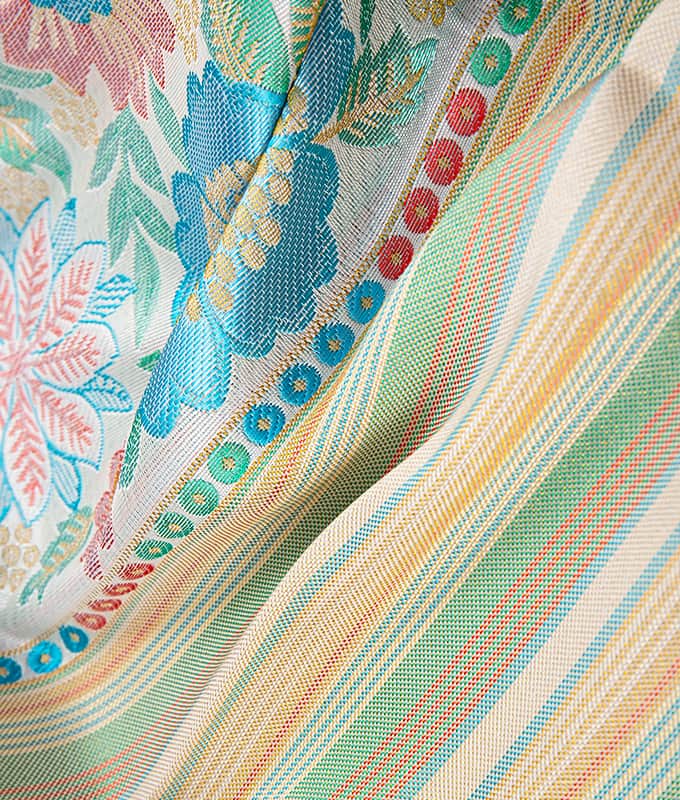
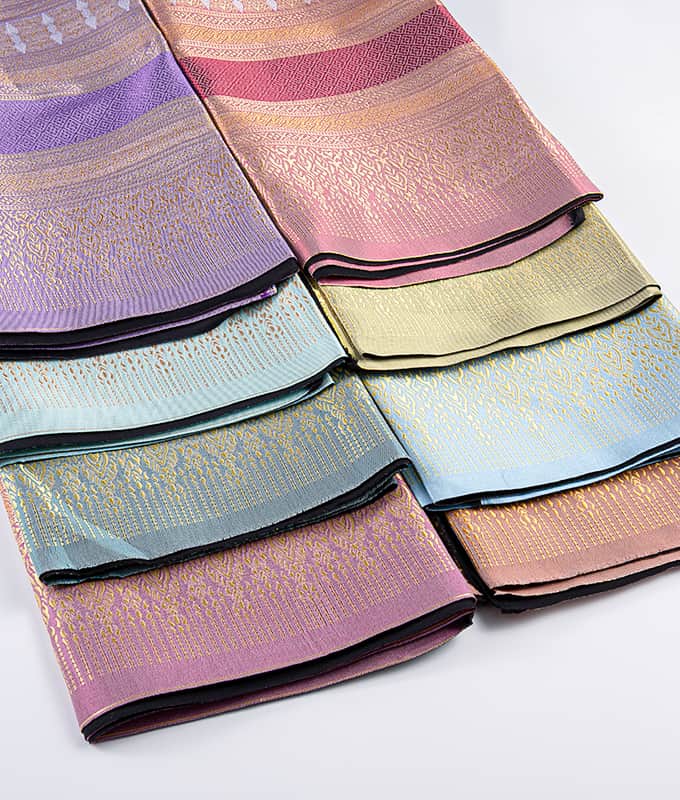
Solrostryck poly-bomullstyg för Sarong — ett livfullt tyg inspirerat av solrosor, utstrålar energi och ljusstyrka. Tillverkad av mjuk polybomull, d...
See Details


Wholesale Thai Sarong Fabric: China vs Thailand – Cost, MOQ & Quality Compared
Branschnyheter-Why Source Thai Sarong Fabric from China?
Global buyers often default to Thailand when sourcing traditional sarong textiles. That instinct misses a critical supply chain reality. Chinese manufacturers with 20+ years of focus on Southeast Asian ethnic fabrics now outperform local Thai workshops on price, scale, and production flexibility.
The average Thai small-batch supplier quotes around 200 THB (approximately $5.60) per piece for basic cotton sarongs, with a minimum order quantity of 1,000 pieces and lead times stretching to 30–45 days. In contrast, a specialized Chinese factory delivers polyester jacquard sarong fabric at $0.45–$0.55 per meter, accepts orders as low as 500 meters, and ships within 20 days. That cost difference compounds quickly on container-scale orders.
| Parameter | China (Zhengyan Textile type) | Thailand (local workshop) |
|---|---|---|
| Unit price (polyester jacquard) | $0.45–$0.55/meter | $5.00–$6.50/piece (approx. 1.5m) |
| Minimum order quantity | 500 meters | 1,000 pieces |
| Lead time (custom order) | 18–22 days | 30–45 days |
| Customization options | Jacquard, print, embroidery, blended fibers | Limited to hand-dye and basic screen print |
| International certifications | OEKO-TEX, ISO colorfastness | Rarely offered for wholesale lots |
Beyond cost, the technical range of Chinese mills gives buyers an edge. A facility equipped with electronic jacquard looms can reproduce intricate Thai, Lao, or Indonesian motifs with thread-level precision—something hand-operated or semi-automated looms in Thailand struggle to match at scale. And because many Chinese factories already export to Europe and North America, they maintain standard testing documentation for flame retardancy, colorfastness, and azo-free dyes. You are not trading authenticity for affordability; you are accessing a production model that makes traditional designs commercially viable for mid-market brands.
Key Materials for Thai Sarong Fabric: Polyester, Cotton & Blends
Choosing the right fiber composition affects durability, drape, and end-use suitability. Most wholesale sarong buyers cycle through three material families: 100% polyester jacquard, 100% cotton plaid or plain weave, and polyester-cotton blends. Each behaves differently under sweat, sunlight, and repeated washing.
| Material | Breathability | Colorfastness | Shrinkage | Typical wholesale price | Best use case |
|---|---|---|---|---|---|
| 100% Polyester Jacquard | Medium (wicks moisture but traps heat) | Excellent (ISO 105-C06 Grade 4–5) | Below 1% | $0.45–$0.55/m | Religious ceremonies, formal wraps, long-term retail |
| 100% Cotton Plaid | High (natural fiber) | Moderate (Grade 3–4, fades faster) | 3–5% | $0.60–$0.80/m | Beachwear, casual daily use |
| Polyester-Cotton Blend (65/35) | Good (balanced) | Good (Grade 4) | 2–3% | $0.50–$0.70/m | Mass-market resort wear, promotional giveaways |
Polyester jacquard holds vivid colors through dozens of washes, which matters for retailers who stock inventory that may sit on shelves. Cotton’s softness appeals to beachgoers but will shrink noticeably unless pre-treated. Polyester-cotton blends offer the most balanced risk-reward ratio for brands entering the sarong market for the first time. Explore our polyester-cotton blended sarong fabric selection for designs that bridge comfort and durability at a mid-range price point.
Jacquard vs Printed: Which Fabric Technique Suits Your Order?
The decoration method defines both the aesthetic ceiling and the cost structure of your sarong fabric. Jacquard weaving builds the pattern directly into the fabric structure using colored threads. Rotary or digital printing applies dye to the surface of a pre-woven base cloth. The difference in longevity is stark.
| Factor | Jacquard (Woven) | Print (Surface) |
|---|---|---|
| Cost increase vs. plain base | 30–50% | 10–20% |
| Pattern complexity | Geometric, ethnic motifs, medallions | Photographic, gradient, multi-color artwork |
| Durability | Pattern lasts for the life of the fabric | Fades after 15–20 washes on average |
| Production cycle for new design | 10–14 days (loom programming + sampling) | 5–7 days (screen engraving or digital proof) |
| Minimum order for custom | 2,000 meters | 500–1,000 meters |
For heritage-inspired products—Thai Pha Sinh, Lao Sinh, or Indonesian Batik-style wraps—jacquard is almost always the right call. The dimensional texture communicates quality that a flat print cannot replicate. Our all-polyester jacquard Thai sarong fabric reproduces classic temple motifs with a clarity that holds through years of use. Print techniques work better when you need seasonal trendy designs at a lower per-unit cost, especially for promotional beachwear collections that refresh annually.
Step-by-Step Guide to Customizing Thai Sarong Fabric
Moving from concept to container requires a defined workflow. The following process reflects the typical journey for a wholesale buyer working with a Chinese factory focused on Southeast Asian styles. Each step includes a time estimate and cost checkpoint.
- Design submission. Provide artwork files (AI, PSD, or high-resolution JPEG) along with target fabric composition. If you lack vector files, the factory can redraw motifs for a $50–$150 design fee. Time: 1–2 days.
- Loom programming (jacquard) or screen engraving (print). For jacquard, technicians convert the design into weave coordinates. For print, screens are laser-engraved. Time: 3–5 days. Cost: approximately $80–$200, often absorbed if order exceeds MOQ.
- First sample production. A 1–2 meter length run-off to verify pattern alignment, color accuracy, and fabric hand feel. Time: 3–5 days. Shipping samples via DHL: $30–$50.
- Sample approval and adjustment. You receive the physical sample. Request color adjustments or density changes if needed. Up to two revision rounds are standard without extra tooling cost. Time: 3–7 days including courier back-and-forth.
- Bulk production. Once the approved sample is confirmed in writing, the factory weaves or prints the full order. Standard output for jacquard is 5,000–8,000 meters per week per loom set. Time: 15–22 days depending on order volume.
- Quality inspection. Inline and final random checks cover width, weight, shading, and colorfastness. Buyers can request an independent third-party inspection (SGS, Intertek) for approximately $300 per person-day. Time: 1–2 days.
- Packing and shipping. Fabric is rolled on tubes, wrapped in polybags, and loaded into cartons. Sea freight to Los Angeles or Rotterdam averages 22–28 days; air freight takes 5–7 days at roughly 4× the cost.
As highlighted in our sarong fabric wholesale case study, buyers who lock in the sampling phase early and approve digital proofs before physical sampling shave 5–7 days off the total timeline.
How to Choose the Right Sarong Size for Your Target Market
One size does not fit all. Sarong dimensions vary by country and cultural usage. Cutting the wrong width or length leads to returns from retailers who cannot sell the product locally. Use this reference when placing a custom order.
| Country / Region | Typical Width x Length | Usage Note |
|---|---|---|
| Thailand | 150 cm × 150 cm | Square wrap worn as Pha Sinh; often paired with a belt |
| Indonesia | 180 cm × 120 cm | Rectangular; used for Kain Panjang, wrapped around waist |
| Malaysia | 200 cm × 100 cm | Longer, narrower shape for Kain Batik; often draped |
| Myanmar | 160 cm × 130 cm | Sized for Longyi; overlaps slightly in front |
If your distribution spans multiple markets, standardizing on a 150 cm width with adjustable length order codes keeps inventory manageable. Many wholesalers add a 5 cm hem allowance to compensate for shrinkage, particularly on cotton and blended fabrics.
Quality Control Checklist for Wholesale Sarong Fabric
Before signing off on a bulk shipment, verify these seven criteria. They separate professional-grade mill output from surplus market rejects. Each checkpoint includes a reference standard you can mention when communicating with your supplier.
- Fabric weight. Measure grams per square meter (gsm) on a calibrated scale. Standard sarong fabric ranges from 120–180 gsm. Anything below 110 gsm feels flimsy for ceremonial wear.
- Yarns per inch. Use a pick glass to count warp and weft threads. A count of 68×68 or higher on polyester jacquard ensures crisp pattern definition. Lower counts cause blurring.
- Colorfastness to washing. Request an ISO 105-C06 test report. A rating of Grade 4 or above for each color indicates the fabric will not bleed onto lighter garments.
- Colorfastness to light. ISO 105-B02 test, minimum Grade 4. Especially critical for beach sarongs exposed to direct sunlight for hours.
- Dimensional stability. Shrinkage after one wash cycle should be below 3% for cotton blends and below 1% for polyester. Ask for an AATCC 135 test result.
- Selvedge quality. Check for tight, even edges without pull-in or loose threads. Poor selvedge leads to unravelling during sewing.
- Eco-certification. Confirm OEKO-TEX Standard 100 or equivalent for the batch you receive. Many European retailers now refuse shipments without this documentation.
Integrating even three of these checks into your purchase order terms shifts the cost of non-conformance back to the manufacturer. A clear quality protocol is the single highest-return investment you can make in a supplier relationship.
Relaterat produkter
-
-
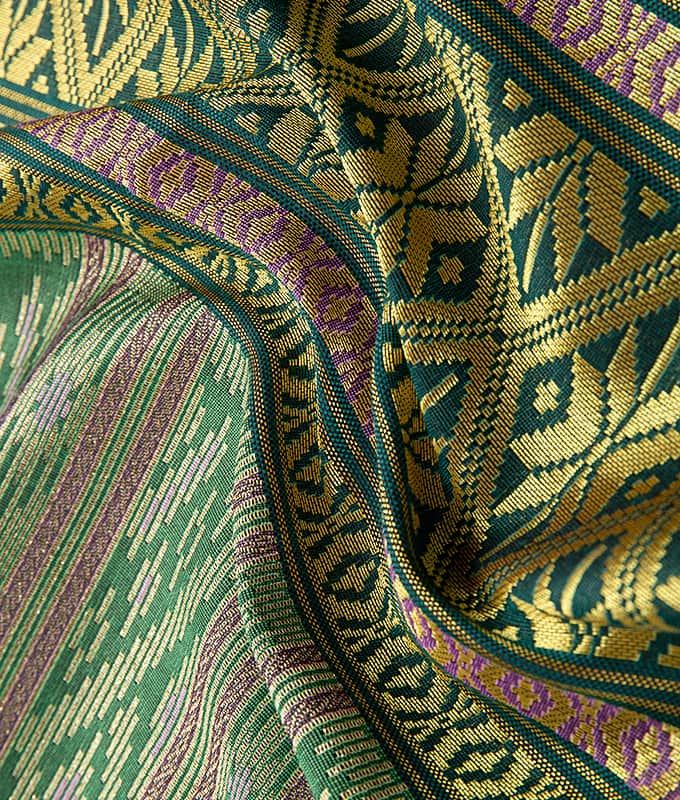
Vertical Stripe Gold Thread Poly-Cotton Tyget för Sarong blandar hållbarhet och komfort med en touch av elegans. Med vertikalt arrangerade gyllene ...
See Details -
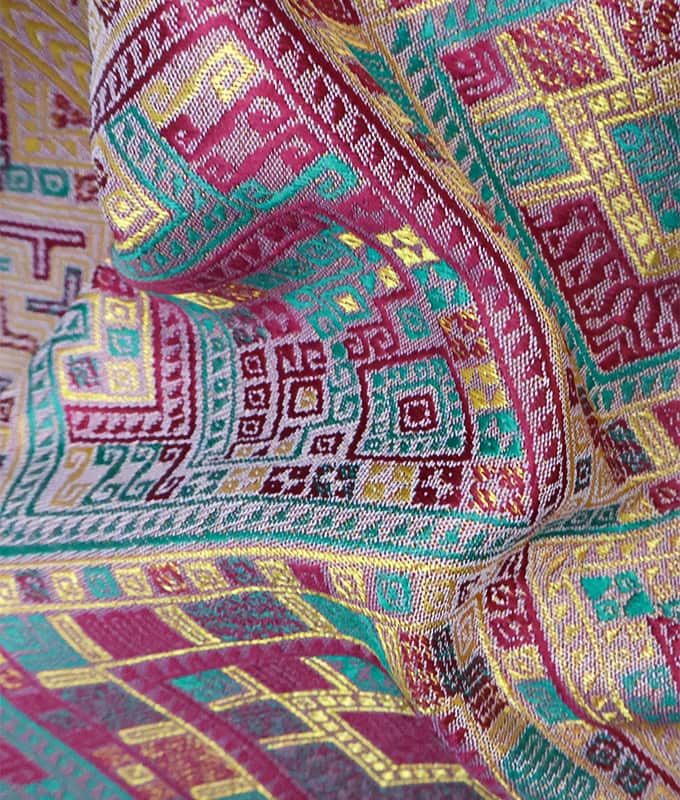
Sidenliknande polyester jacquardtyg för thailändska Pha Sinh Sarong — som kombinerar elegansen av sidenliknande textur med högprecisionsjacquardhan...
See Details -
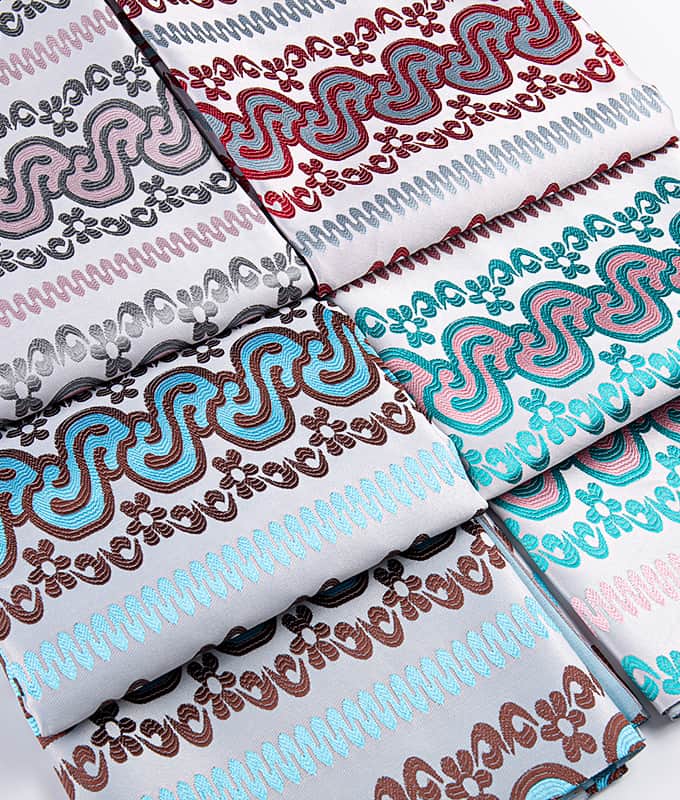
Det S-formade 3D-texturerade jacquardtyget i polyester för Sarong kombinerar elegans med hållbarhet. Tillverkad med avancerad elektronisk jacquard-...
See Details -
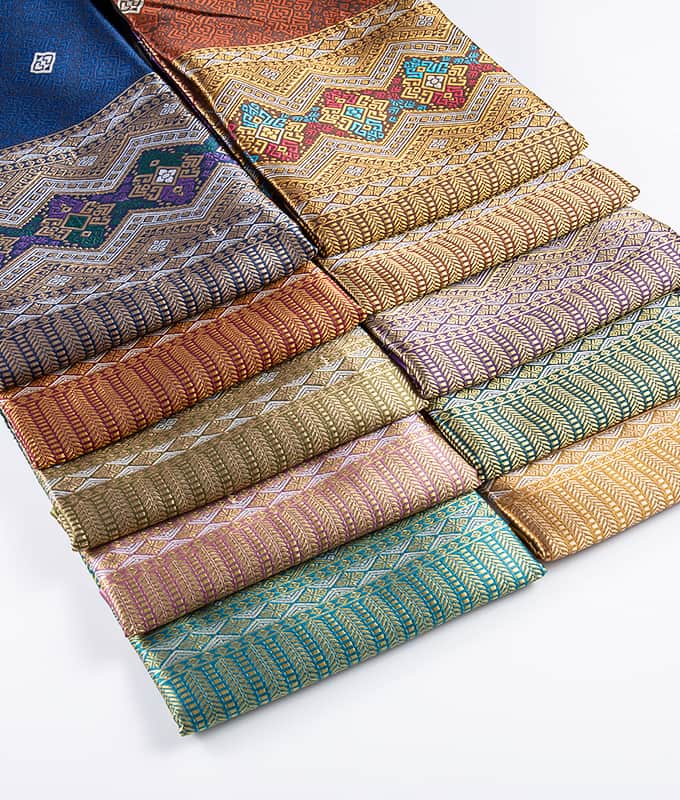
Polyestertyget för traditionell sydostasiatisk sarongkjol överbryggar arv och modernitet. Med rötter i kulturella traditioner återupplivar detta ty...
See Details -
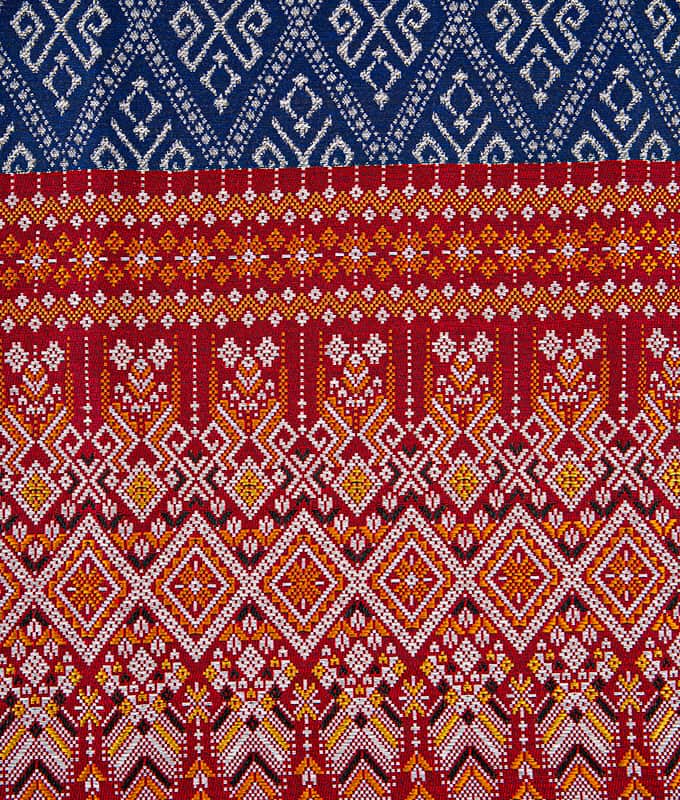
Handsytt polybomullstyg för Sarong – en raffinerad blandning av stil och praktiska egenskaper, utformad för att ge tubkjolar en slät struktur och e...
See Details

